Deep tissue vs Swedish massage: which is right for you?



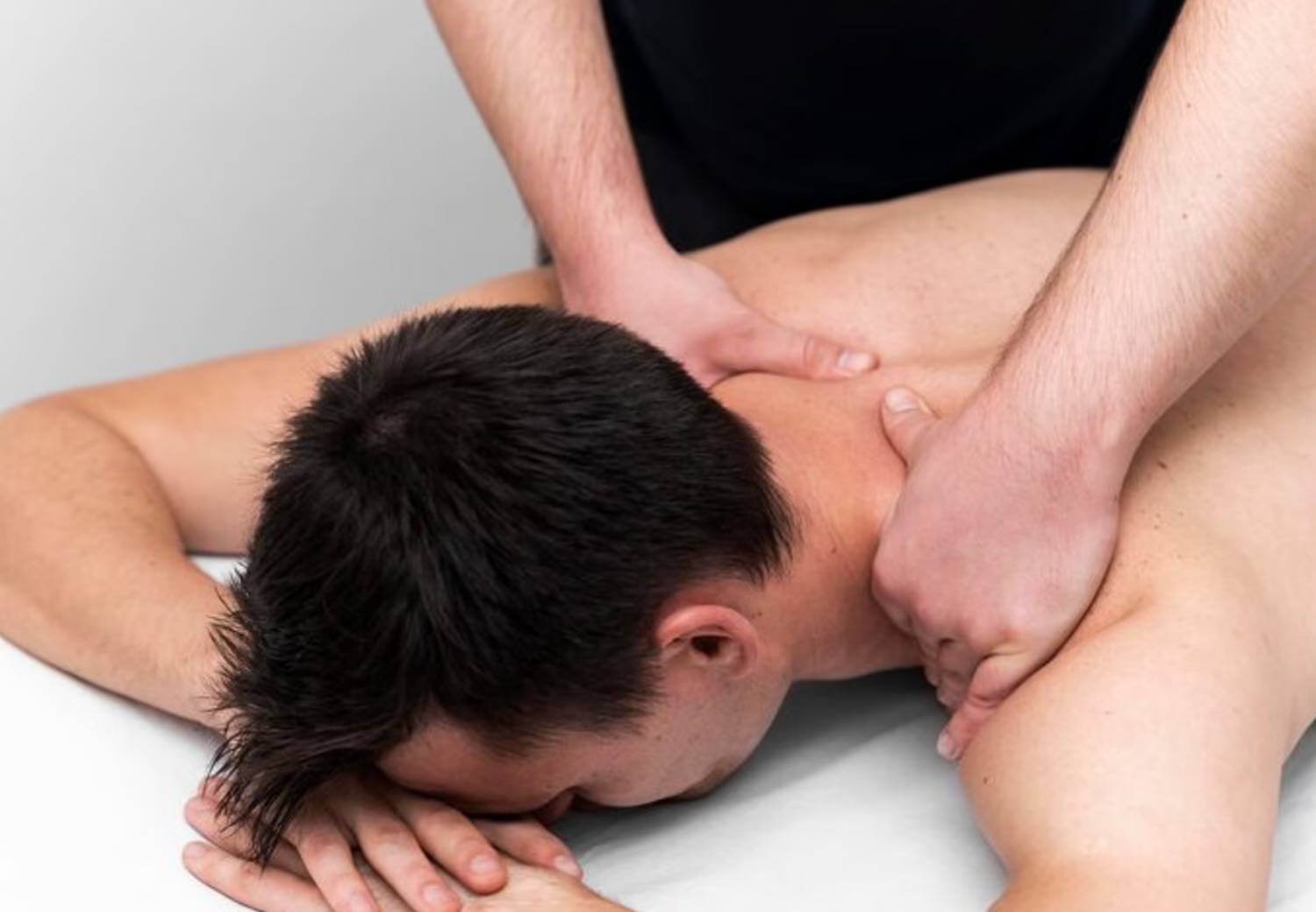
Quick answer: Swedish massage uses long, gliding, moderate-pressure strokes to calm the nervous system, lower stress, and ease general tension. Deep tissue massage uses slower, firmer pressure that reaches the deeper layers of muscle and fascia to release stubborn knots, chronic tightness, and pain. If you want to relax, choose Swedish. If you want to fix a specific ache you have lived with for weeks, choose deep tissue. Most of our regulars at Transformational Wellness in Diamond Springs end up alternating between the two, and that is usually the smartest choice.
The rest of this guide walks you through exactly how the two styles differ in practice, who each one suits, what each feels like on the table, how to tell which you need today, and what to expect if you book a session at our studio just outside Placerville.
What Swedish massage actually is
Swedish massage is the style most people picture when they hear the word “massage.” It was developed in the early 1800s and is still the foundation of almost every spa menu in the world. The therapist uses five basic strokes: long gliding effleurage, kneading petrissage, rhythmic tapping, friction, and vibration. Pressure stays in the light-to-moderate range. Oil or lotion keeps the movement smooth and continuous.
The point of Swedish massage is not to break anything up. The point is to shift your nervous system out of fight-or-flight and into rest-and-digest. When that switch happens, your heart rate slows, your blood pressure drops, your breathing deepens, and the small muscles around your spine stop bracing. That is why a good 60-minute Swedish session can leave you feeling the way an afternoon nap wishes it could.
A session usually opens with you face-down. The therapist warms the back with broad strokes, moves to the shoulders, neck, arms and hands, then flips you to work on the legs, feet, scalp and face. You do not have to talk. You do not have to help. You just breathe.
Swedish is the right starting point if you have never had a massage, if you have been running on stress, if you sleep poorly, if you want a monthly tune-up, or if the idea of someone pressing hard on your body makes you tense up before you get to the table. Tension on the table defeats the whole point.

What deep tissue massage actually is
Deep tissue massage looks similar from across the room but feels very different under your skin. The therapist still uses hands and forearms, still works with oil, still moves along the same major muscle groups. What changes is the pressure, the pace, and the target.
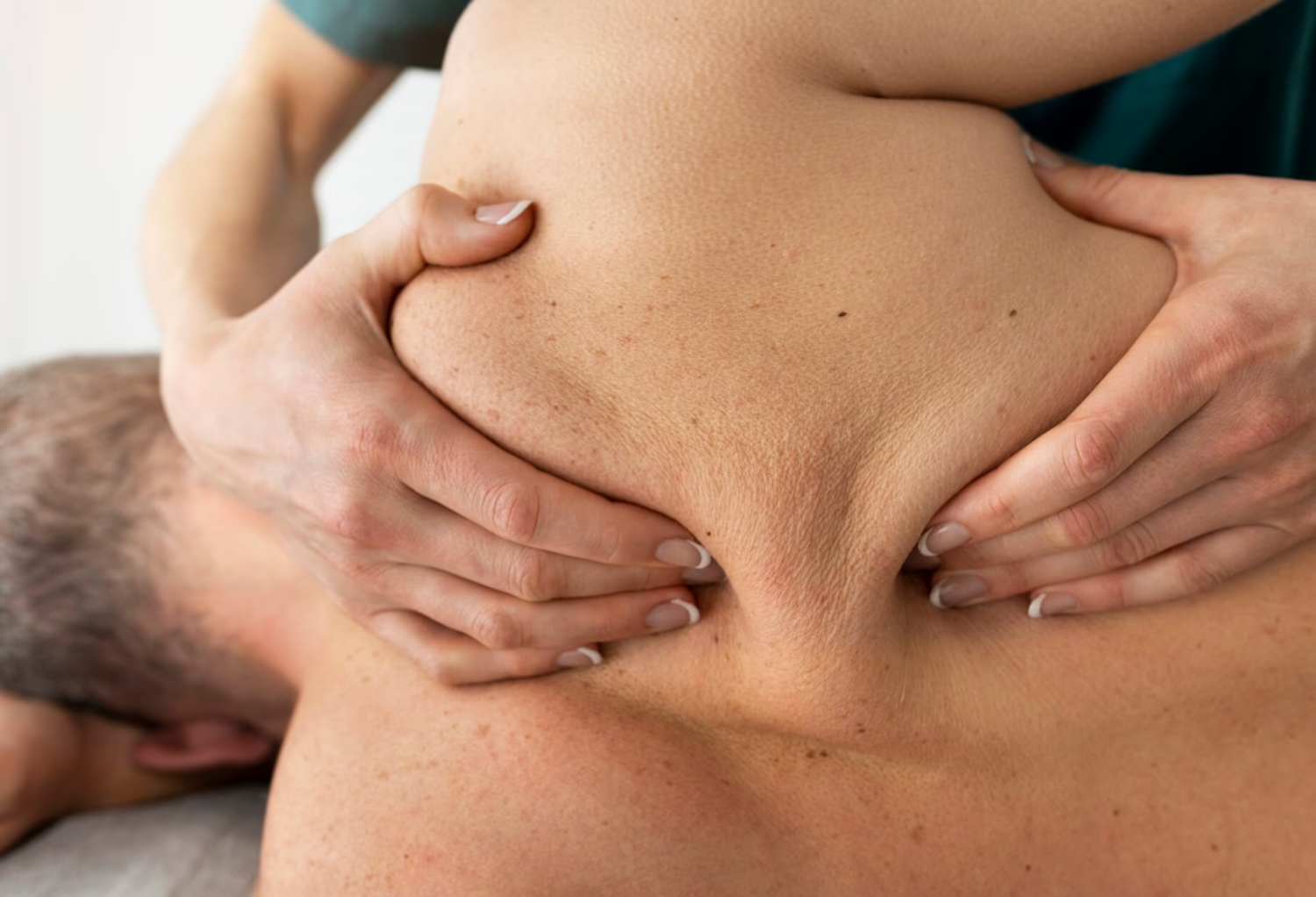
In a deep tissue session, the therapist slows down and sinks. Instead of gliding across the top of your back, they wait for the surface muscles to relax, then follow the ache down into the deeper layers: the ones underneath the trapezius, inside the rhomboids, behind the shoulder blade, along the band of fascia that wraps the IT band. The stroke is often a slow, sustained glide that feels like someone is pressing a warm, dull edge through a stuck spot until the stuck spot lets go.
Deep tissue is not the same thing as “harder.” Harder is just harder. Deep is a specific technique that gets the body to welcome pressure into places that would have guarded against it five minutes earlier. A well-trained therapist can take you deeper with less force than a rougher therapist can with more.
A deep tissue session usually spends more time on one or two problem areas and less time on the full body. If you booked 60 minutes to fix a chronically tight right shoulder, do not expect a full-body spa experience. You are getting focused clinical work.
Deep tissue is the right choice if you have a specific, named complaint: the knot between the shoulder blades that will not quit, a lower back that locks up after a long drive to Placerville, calves that still ache from last weekend’s hike on the El Dorado Trail, or neck tension that gives you a daily headache. It is also the better choice if you have had Swedish massages before and walked out thinking, “that was nice, but it did not change anything.”
Side by side: the honest comparison
Pressure. Swedish is light to moderate. Deep tissue is moderate to firm, with sustained holds on problem spots.
Pace. Swedish moves continuously. Deep tissue slows down and sometimes pauses entirely on one spot while the tissue releases.
Goal. Swedish calms the nervous system and improves circulation. Deep tissue releases chronic muscular adhesions and improves range of motion.
How it feels. Swedish feels pleasant the whole way through. Deep tissue feels productive, sometimes bordering on “that’s the spot,” sometimes mildly uncomfortable when the therapist works a stubborn adhesion, always followed by a clear release.
Afterwards. Swedish leaves you floating. Deep tissue can leave you a little sore for 24 to 48 hours, the way a good workout does. Both benefit from hydration.
Who tends to prefer it. Swedish: anyone wanting to de-stress, pregnancy clients (as prenatal massage, with specific setup), first-timers, anyone with a low pain tolerance. Deep tissue: athletes, people with desk-job pain, chronic pain clients, anyone who has been told to “just stretch more” and knows it is not enough.
Which one is right for you today?
Ask yourself three questions.
- Can you point to the problem? If you can press your thumb into a spot and say “it hurts right here,” you want deep tissue. If the problem is “I just feel wound up,” you want Swedish.
- How long has it been going on? New tension (a week or less) often responds to Swedish and good sleep. Chronic tension (three weeks or more) rarely resolves without deeper, targeted work.
- What happens after you relax? If you can relax on a Sunday and the ache returns on Monday morning, your muscles are holding a pattern. Deep tissue, usually in a short series, is what breaks the pattern.
If the answers do not point clearly to one style, book a 90-minute therapeutic massage and let your therapist decide. Our standard therapeutic session blends both, starting Swedish to warm the body and relax the nervous system, then transitioning to deeper work on the areas that need it. For most people this is the best of both worlds.
What a session looks like at Transformational Wellness
You arrive at our studio in Diamond Springs, 10 minutes from downtown Placerville. The intake is short. We want to know what is actually bothering you, how long it has been bothering you, what makes it worse, and anything your doctor has told you to avoid.
You change in private, climb onto the table under a sheet, and let the therapist know if the room is warm enough. The session begins. If you booked Swedish, pressure will stay comfortable and even. If you booked deep tissue, the therapist will check in as they go deeper on problem areas: a verbal “how’s the pressure?” and a quick adjustment are built into the work. We use only organic, toxin-free lotions and oils, because purer is better for your body and skin.
You are in charge of pressure the whole time. “A little lighter” or “that spot, more time” are the two most useful things you can say. Nothing you ask will insult a good therapist. We would rather you tell us than hold your breath.
Sessions run 60, 90, or 120 minutes. Sixty is enough for a general tune-up or one focused area. Ninety is the sweet spot for most people, because it gives time to warm the body and still spend real time on problem spots. One-twenty is for whole-body recovery after a long trip, a hard training block, or when you have let things pile up.
After the session, we leave the room while you dress, bring water, and talk through what we noticed and what might help between visits: a stretch, a sleep position, a drive-home tip to keep the work from undoing itself.
How often should you come back?
Honest answer: it depends on your goal.
For general stress management and maintenance, once a month is enough for most people, and it is the rhythm most of our regulars settle into.
For resolving a specific chronic issue, such as a frozen shoulder, recurring tension headaches, or a lower back that has been locked up for months, the pattern that works best is weekly or every-other-week for the first four to six sessions, then once a month for maintenance. Trying to fix years of tension with one massage a quarter is like going to the gym twice a year; it is better than nothing, but it will not change your baseline.
This is why our membership plans exist. A membership covers a monthly session at a lower per-session rate and lets you add on when life demands it: a 90-minute deep tissue after a hard week, a lymphatic drainage session after travel. A membership pays for itself fast, and the consistency is what actually resolves long-held tension.
Deep tissue vs sports massage: a related question
A lot of clients ask us how deep tissue differs from sports massage. Short version: sports massage borrows deep tissue techniques but uses them in the specific context of athletic recovery and performance. It focuses on the muscles you just used (or are about to use) and includes stretching and range-of-motion work that a classic deep tissue session usually skips.
If you are training for the California International Marathon, cycling the American River Bike Trail each weekend, or hiking the ridges around Placerville, you probably want sports massage, not deep tissue. If you sit at a desk and have one stubborn knot in your left shoulder, you want deep tissue. If you are on your feet all day for work, either can help; your therapist will steer you based on what they feel in the tissue.
Who should not book deep tissue
Deep tissue is safe for most adults, but it is not for everyone every day.
- If you are pregnant, book prenatal massage instead. It is tailored to pregnancy (positioning, pressure, and the areas we avoid) and it is one of the most-requested sessions at our studio.
- If you have had surgery in the last six weeks, wait. Lymphatic drainage may be a better bridge, and your surgeon’s clearance comes first.
- If you are on blood thinners, mention it at intake. We adjust pressure.
- If you have a known injury that has not been diagnosed, see a doctor before booking firm pressure on it.
- If you are in a flare of a serious condition (acute shingles, uncontrolled high blood pressure, recent DVT, active cancer treatment without your oncologist’s sign-off), skip deep tissue for now.
None of these rule out massage entirely. They just mean we match the style to what your body is actually doing this month.
Common questions about deep tissue and Swedish massage
Does deep tissue massage hurt? It should not. A good deep tissue session walks the line of productive discomfort: a sensation you can breathe through, that releases in 10 to 20 seconds, and that leaves the area looser than it was. If your therapist is pressing hard enough that you are holding your breath or clenching your jaw, speak up. Pain locks muscles down; it does not open them.
How long does soreness last after deep tissue? Most people feel it for 12 to 48 hours. Hydrate, walk, and avoid heavy workouts for a day. If soreness lasts longer than three days, the work went too deep for your current state; tell your therapist so they can scale it next visit.
Can I get a deep tissue massage if I have never had a massage before? You can, but Swedish or a general therapeutic session is usually a better introduction. You will enjoy deep tissue more once your body has a baseline sense of what relaxed muscle feels like.
How much pressure is “deep tissue”? There is no fixed measurement. In practice, deep tissue starts where you first think “oh, that’s a knot” and goes a notch beyond it, slowly. Your therapist should check in whenever they shift gears.
Is Swedish massage useless if I have chronic pain? No. For some people with chronic pain, Swedish is actually the smarter first step, because the nervous system is so revved up that firmer pressure makes everything worse. Once the system settles, deeper work becomes productive.
Which is better for sleep? Swedish, for most people. Deep tissue can leave you energized for a few hours before the relaxation lands. If you book with sleep in mind, schedule earlier in the day.
Book your session in Diamond Springs
Transformational Wellness is at 6692 Merchandise Way, Suites A & B in Diamond Springs, about 10 minutes from the El Dorado County courthouse in Placerville and a straight shot from El Dorado Hills, Cameron Park, Shingle Springs and Pollock Pines. Call (530) 621-2420 or book online; same-day appointments are often available. Office scheduling runs 8:30 AM to 4:30 PM Monday through Friday; therapists are on the table Monday through Friday 9 AM to 8:30 PM and weekends 9 AM to 5 PM.
If you are weighing which style to book first, the honest recommendation: start with a 90-minute therapeutic massage, tell us what hurts, and let the session move between Swedish and deep tissue as your body needs. We will tell you at the end which direction we think is right for session two. More on our full service menu and massage for migraines.
Written with Leela Guerrero, LMT, owner of Transformational Wellness, based on fifteen years of bodywork practice in El Dorado County.

Transformational Wellness
6692 Merchandise Way, Suite A & B
Diamond Springs, CA 95619
Serving Placerville, Diamond Springs, El Dorado, Shingle Springs, Cameron Park, El Dorado Hills, Pollock Pines, Camino, Coloma, Folsom, Auburn, Sierra Foothills.
